Order - Passeriformes
Family - Paridae (Tits and Chickadees)
Family - Paridae (Tits and Chickadees)
Asian Tit
Parus cinereus
苍背山雀 (cāng bèi shān-què)

Malay : Seserai Bakau
Japanese : クロシジュウカラ (kuro shijū-kara)
Kanji 日語漢字 : 黒四十雀
Extent of Occurrence (resident/breeding) : 8,480,000km²
Migratory Status : Not a Migrant
Breeding Endemic : No
Extent of Occurrence (resident/breeding) : 8,480,000km²
Migratory Status : Not a Migrant
Breeding Endemic : No
Taxonomy update for 2013
Great Tit (Parus major) is split into three species :
- Great Tit (Parus major)
- Cinereous Tit (Parus cinereus)
- Japanese Tit (Parus minor)
- Japanese Tit (Parus minor)
Size : 12.5–14 cm; 11.9–22.1 g
Subspecies (21) and Distribution
EBIRD GROUP (POLYTYPIC)
Asian Tit (Cinereous) Parus cinereus [cinereus Group]
- Parus cinereus caschmirensis (E. J. O. Hartert, 1905, Gilgit)
– Northwest Himalayas east from northeast Afghanistan (Nuristan) and northern Pakistan to northern Uttar Pradesh. - Identification :
– Has upperparts bluish gray (darker than ziaratensis); tail blackish gray and broadly fringed bluish gray on r1‒r4, tipped white on r4, outer rectrix (r6) entirely white and adjacent one (r5) with long white wedge at tip of inner web (20‒45 mm long, mainly > 30 mm); tertials broadly fringed pale gray; flight feathers narrowly edged paly gray, underparts off-white or tinged buffish, slightly whiter on sides of breast and border of ventral line. Size: wing of male 68.0‒81.5 mm, wing of female 67‒77 mm; tail of male 60‒73 mm, tail of female 54‒66 mm; bill 11.5‒13.0 mm; tarsus 17.0‒20.5 mm. - Parus cinereus ziaratensis (Whistler, 1929, Ziarat, 8,500 ft., Baluchistan)
– Central and southern Afghanistan and western Pakistan (Baluchistan). - Identification :
– Similar to the previous subspecies but has a slightly smaller bill, paler upperparts (pale gray tinged blue, but even paler and less blue in Kandahar), broader and whiter edges of tertials, and paler and whiter underparts. An "immature" from Herat showed a slight trace of green on the upper mantle. Size: wing of male 67‒78 mm, wing of female 66.5‒71.5 mm; tail 54‒72 mm. - Parus cinereus decolorans (Koelz, 1939, Jalalabad, eastern Afghanistan)
– Northeast Afghanistan (east of Kabul and south of Hindu Kush) and northwest Pakistan. Restricted to Afghanistan by Vaurie and Harrap and Quinn. - Identification :
– Subspecies decolorans has underparts darker and flanks grayer, although the latter wear paler; has more extensive black on r5 compared to P. c. caschmirensis. Size: wing of male 71‒78 mm, wing of female 70‒72 mm; tail of male 63‒68 mm. - Parus cinereus planorum (Hartert, 1905, southern Punjab)
– Northern India (from Kumaon eastwards) and Nepal, through Bhutan, northeast India, and Bangladesh, east to western and central Myanmar (east to the western border of the Shan plateau and south to southern Arakan, Pegu, and Thaton). - Identification :
– Subspecies planorum is like caschmirensis but upperparts slightly darker gray, tinged bluish, less white in tail (but outermost feather white, wedge on inner web of r5 is usually 25‒35 mm, range 12‒38 mm), tips of greater coverts narrower and whiter, fringes of tertials whiter, and underparts also whiter. Size: wing of male 63‒71 mm, wing of female 59‒69 mm; tail of male 50‒61 mm, tail of female 51‒60 mm. - Parus cinereus vauriei (Ripley, 1950, Chabua, northeastern Assam)
– Northeast India (eastern Assam and eastern Arunachal Pradesh. - Identification :
– Subspecies vauriei resembles planorum but the flanks are slightly grayer, and white in outer tail is largely restricted to distal half of outermost rectrix (but usually < 10 mm deep on inner web of r5). Size: wing of male 59–65 mm, wing of female 60 mm; tail of male 53.5–58.0 mm, tail of female 52 mm. - Parus cinereus stupae (Koelz, 1939, Sanchi, Bhopal)
– Western, central, and southeast India. - Identification :
– Subspecies stupae is again similar to caschmirensis but slightly darker bluish gray above, with greater coverts narrowly fringed bluish gray, tertials whiter, outer tail feather white and adjacent one extensively so (wedge on inner web 20‒28 mm and outer web entirely white), and underparts paler or tinged pale pinkish buff (usually heaviest on female) except for pale gray flanks. Also considered very close in morphology to the geographically adjacent mahrattarum. Size: wing of male 60‒73 mm, wing of female 60‒69 mm; tail of male 47‒61 mm, tail of female 48‒58 mm. - Parus cinereus mahrattarum (E. J. O. Hartert, 1905, Nuwara Eliya, Ceylon)
– Southwest India (Kerala) and Sri Lanka. - Identification :
– Subspecies mahrattarum is closest to stupae but upperparts slightly darker or more heavily bluish gray, with less white in tail (outermost feather all white, but next one only half-white, with wedge on inner web covering 16.5‒34.0 mm, usually > 25 mm), and underparts duller smoky gray, considered in latter character to be closest of caschmirensis. Size: wing of male 68‒75 mm, wing of female 66‒69 mm; tail of male 57‒65 mm, tail of female 56‒58 mm. - Parus cinereus templorum (Meyer de Schauensee, 1946, Wat Pa, central Thailand)
– Northeastern Thailand and southern Indochina (southern Laos and southern Vietnam. - Identification :
– Subspecies templorum is very like planorum, differing chiefly in having more extensive black on the greater wing coverts; also, black shaft streak on r1 averages less extensive and white on inner web of r5 measures usually 26‒35 mm. Size: wing of male 64.0‒68.5 mm, wing of female 61.5‒65.0 mm; tail of male 58‒63 mm, tail of female 54‒58 mm. - Parus cinereus hainanus (E. J. O. Hartert, 1905, Hainan)
– Endemic to Hainan. - Identification :
– Subspecies hainanus is similar to caschmirensis but slightly darker above, with the mantle often washed olive, greater coverts mostly black (narrowly fringed bluish gray and tipped white), tertials fringed white, outermost rectrix white, distal half (12‒35 mm) of inner web of adjacent one white and tip of r3 also white, underparts pale grayish white or dull cream, and flanks grayer. Compared to geographically adjacent subspecies templorum, upperparts darker, nuchal spot less conspicuous, and tail shorter; these authors also noted a strong similarity to subspecies commixtus of southeast China and northern Vietnam. Size: wing of male 59‒67 mm, wing of female 58‒63 mm; tail of male 55.0‒60.5 mm, tail of female 52‒58 mm. - Parus cinereus ambiguus (Raffles, 1822, Sumatra)
– Southern Thailand, Malay Peninsula, and Sumatra; also extreme southern Tenasserim (Myanmar). - Identification :
– Subspecies ambiguus is also similar to but smaller than caschmirensis, with slightly darker upperparts, a smaller nuchal patch, greater coverts black with thin bluish fringes, tertials fringed pale gray, white in tail reduced to most of outermost feather (wedge on r6 is up to 35 mm deep) and tip of next (r5), and underparts slightly darker. Size: wing of male 64‒67 mm, wing of female 61‒63 mm; tail of male 55.5‒61.0 mm, tail of female 54‒56 mm. - Parus cinereus cinereus (Vieillot, 1818, Batavia, Java)
– Java and Lesser Sundas. - Identification :
– Similar to ambiguus, but upperparts slightly darker blue-gray; underparts paler and tinged pinkish; outer tail feathers white and tips of next two also white, on r5 forming a wedge on inner web 3‒13 mm deep. Overall, this subspecies is considered to be rather paler and brighter than ambiguus. Size: wing of male 63‒70 mm, wing of female 61‒65 mm; tail of male 50‒57 mm, tail of female 50‒57 mm. - Parus cinereus sarawacensis (Slater, 1885, Bungal Hills [probably = Bengo Range] , Sarawak)
– Patchily distributed in coastal Borneo. - Identification :
– The subspecies sarawacensis resembles nominate cinereus, but white nuchal patch is either reduced or absent (thus black cap is more extensive), upperparts slightly darker gray, uppertail coverts black (not gray), tail feathers also black with narrow gray fringes and white restricted to outermost rectrix (which has base of inner web black), and underparts pale grayish white with a broad blackish ventral stripe. Size: wing length 68 mm; tail length 55 mm.
EBIRD GROUP (POLYTYPIC)
Asian Tit (Japanese) Parus cinereus [minor Group]
- Parus cinereus minor (Temminck & Schlegel, 1848, Japan)
– Occurs from southeastern Tibet, across much of east-central and northeastern China (south to the Yangtze River and Zhejiang, and west to eastern Qinghai), through southeastern Russia (Amurland and Ussuriland) and Korea to Japan (except Nansei Shoto), including Sakhalin, Moneron Island, and the southern Kurile Islands. - Parus cinereus dageletensis (Kuroda & Mori, 1920, Dagelet Island, Japan )
– Endemic to Ullŭng Island, South Korea. - Identification :
– Like minor but ventral stripe narrower, with more restricted greenish upperparts, and whiter underparts. - Parus cinereus tibetanus (Hartert, 1905, Chaksam, Tsangpo valley, Tibet)
– Distributed across southwestern China (southern Qinghai, northwestern Sichuan) to southeastern Tibet (19). Also recorded (once) in Sikkim. - Identification :
– Similar to the slightly smaller subspecies minor (a very abrupt change in size occurs in parts of Sichuan) but has less green on the mantle (upper mantle less yellow-olive, lower mantle more grayish olive), with less contrast between mantle/scapulars/back and rump/uppertail-coverts, and more white in the outer two outer tail feathers (28‒51 mm on inner web of r5 versus 3‒27 mm on r5 of minor, and up to 33 mm on inner web of r6 in the latter. - Parus cinereus subtibetanus (Kleinschmidt & Weigold, 1922, 'Tatsienlu [= Kangting] , eastern Sikang, fide Vaurie, 1959, Birds Pal. Fauna, Passeriformes, p. 514.)
– Occurs from southeastern Tibet (Nang Xian in Tsangpo Valley), through southern China (southwest Sichuan, western Guizhou, and Yunnan), and northwestern Myanmar. - Identification :
– Very similar to tibetanus, with which it is often synonymized, but maintained by, among others, Vaurie and Harrap and Quinn; extent of white on inner web of r5 is 18‒37 mm, upperparts coloration, and size (wing length 61‒76 mm in males, 58‒73 mm in females; tail of male 62‒71 mm, tail of female 57‒67 mm) all considered to be intermediate between tibetanus and minor. - Parus cinereus nubicolus (Meyer de Schauensee, 1946, Doi Pa Horn Pok, Thailand-South Shan States border)
– Occurs from southeastern Myanmar (southeast Kachin, Shan States, Kayah, and northern Karen) across northern Thailand, through northern Laos, and extreme western Tonkin (northern Vietnam). - Identification :
– Resembles tibetanus and (by extension subtibetanus), but slightly yellower on mantle; has white on inner web of r5 slightly more extensive (26‒40 mm) and is overall marginally smaller (wing of male 62‒71 mm, wing of female 63‒67 mm; tail of male 54‒62 mm, tail of female 53‒61 mm).
EBIRD GROUP (MONOTYPIC)
Asian Tit (commixtus) Parus cinereus commixtus
- Parus cinereus commixtus (Swinhoe, 1868, Tingchow Mountains, Fohkien, China)
– Occurs in China east of Yunnan and south of the Yangtze River, to Hong Kong, as well as through eastern Tonkin and coastal central Annam (Vietnam). Listed as a vagrant to Taiwan. - Identification :
– Upperparts grayer and less olive-green than the minor subspecies group (almost no trace of green in Vietnam), recalling the cinereus group, but tail grayer (black confined to shaft of r1), underparts also slightly darker and in fresh plumage tinged pinkish-drab. The amount of white in the outer two rectrices varies (r5 has white on inner web 5‒24 mm, whereas outer web varies from whitish to all dark). Size: wing of male 60‒71 mm, wing of female 61‒67 mm; tail of male 52‒62 mm, tail of female 50‒62 mm.
EBIRD GROUP (MONOTYPIC)
Asian Tit (Amami) Parus cinereus amamiensis
- Parus cinereus amamiensis (Kleinschmidt, 1922, Amami, northern Riu Kiu Islands)
– Endemic to Amami Ōshima and Tokuno-Shima in the Amami archipelago, northern Ryukyu Islands. - Identification :
– Differs from the subspecies minor in having olive-green tones restricted to the upper mantle, contrasting sharply with the gray lower mantle and rump. Size: wing of male 63.0‒67.5 mm.
EBIRD GROUP (MONOTYPIC)
Asian Tit (Okinawa) Parus cinereus okinawae
- Parus cinereus okinawae (Hartert, 1905, Okinawa)
– Endemic to Okinawa and Yagaji in the central Ryukyu Islands. - Identification :
– Similar to amamiensis but upperparts (back and rump) darker gray and upper mantle less green (reduced to a mere wash at upper border. Size: wing of male 60‒70 mm.
EBIRD GROUP (MONOTYPIC)
Asian Tit (Ishigaki) Parus cinereus nigriloris
- Parus cinereus nigriloris (Hellmayr, 1900, Ishigaki, southern Riu Kiu Islands)
– Endemic to Ishigaki and Iriomote in the southern Ryukyu Islands. - Identification :
– Darker than the geographically closest subspecies, okinawae. Nuchal patch lacking. Upperparts dark bluish gray, with a slightly glossy mantle. White in blackish-gray tail restricted to tip of outermost feather (r6). White on cheeks much less extensive than other subspecies, surrounded by black neck-sides merging with cap, lores, bib, and ventral stripe. Flanks darker gray. Size: wing of male 64.0‒68.5 mm. Often treated as part of the cinereus group or recognized as a separate species on the basis of its highly distinctive plumage and vocalizations.

Distribution Map
.jpg)
Parus cinereus ssp. ambiguus
Date : 28 September 2025
Location : Jalan Kuala Terong, Trong, Mukim Trong, Daerah Larut, Matang & Selama, Perak

Right : Parus cinereus ssp. ambiguus
Left : Yungipicus moluccensis ssp. moluccensis
Date : 19 July 2023
Left : Yungipicus moluccensis ssp. moluccensis
Date : 19 July 2023
Location : Pulau Burung Sanitary Landfill, Nibong Tebal,
Daerah Seberang Perai Selatan, Pulau Pinang
Daerah Seberang Perai Selatan, Pulau Pinang
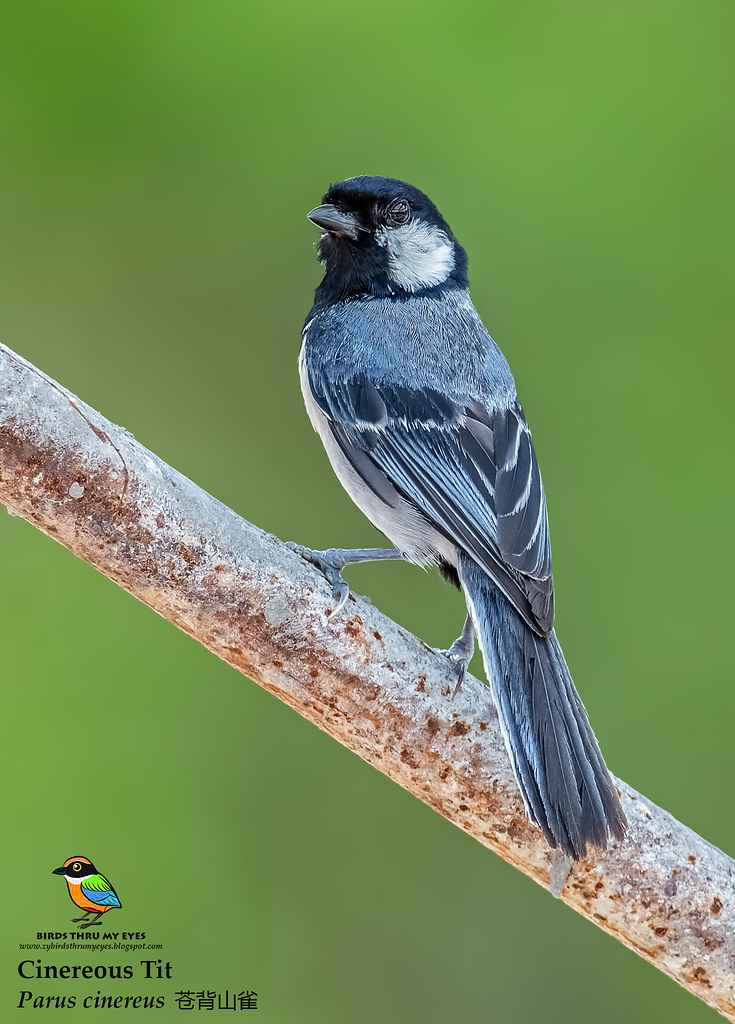
Parus cinereus ssp. ambiguus
Date : 20 May 2018
Location : Jeti Nelayan Kampung Sungai Ular, Daerah Bagan Datuk, Perak
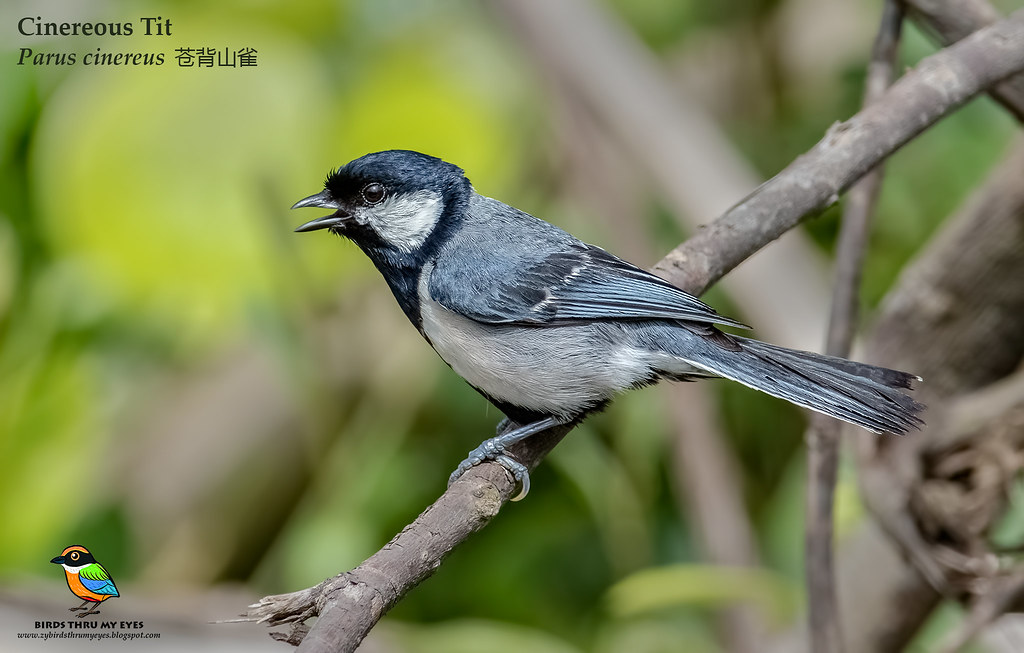
Parus cinereus ssp. ambiguus
Date : 20 May 2018
Location : Jeti Nelayan Kampung Sungai Ular, Daerah Bagan Datuk, Perak
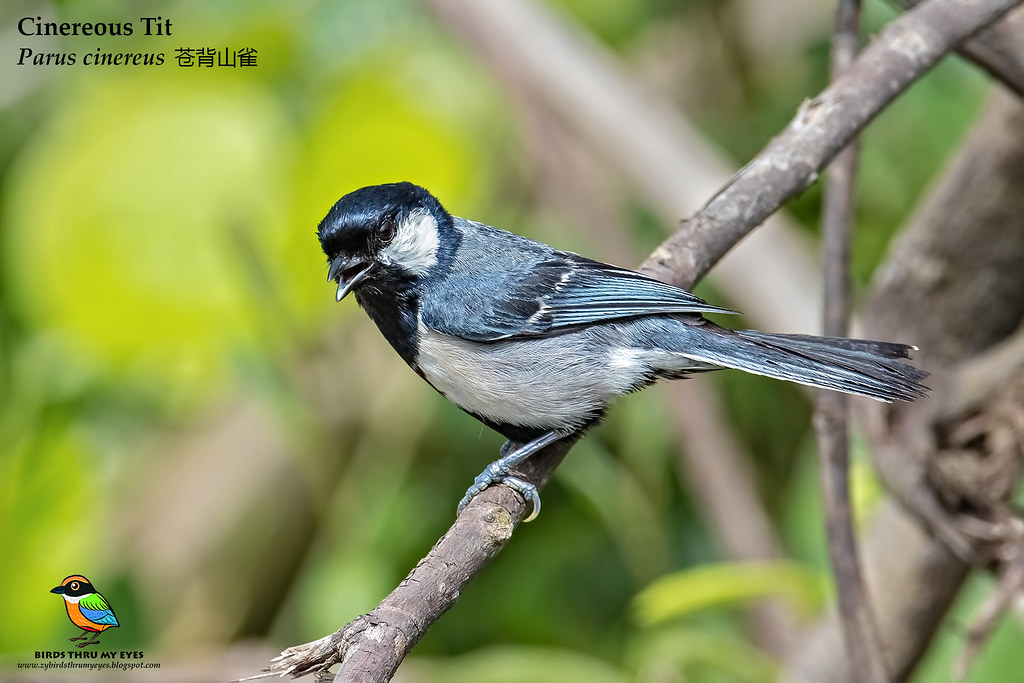
Parus cinereus ssp. ambiguus
Date : 20 May 2018
Location : Jeti Nelayan Kampung Sungai Ular, Daerah Bagan Datuk, Perak
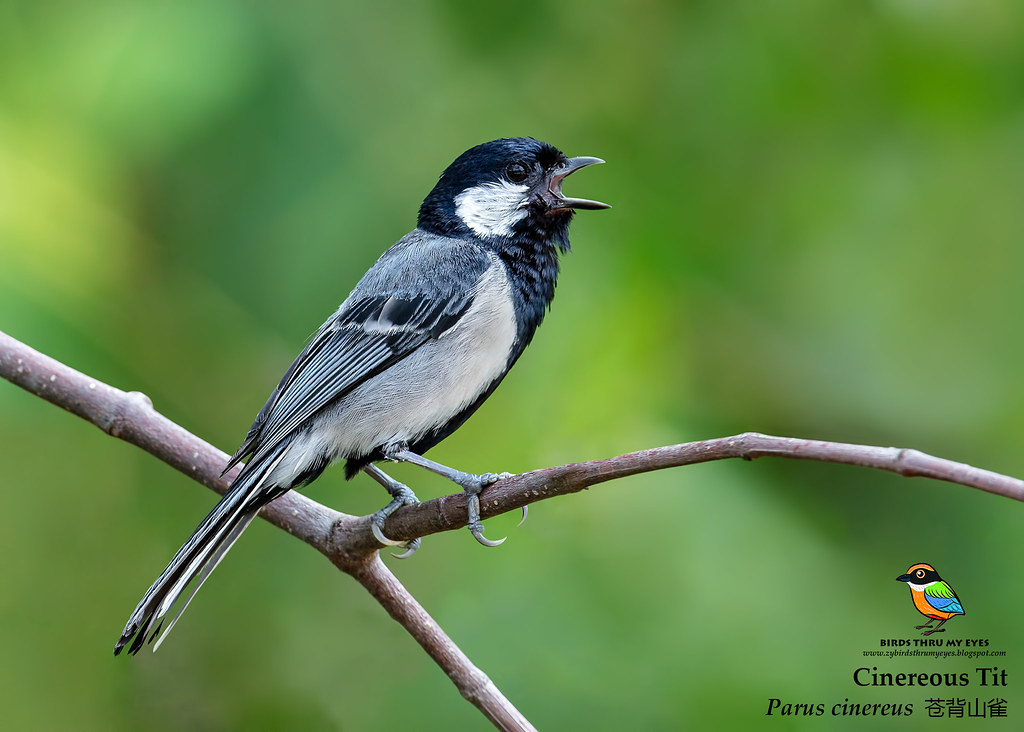
Parus cinereus ssp. ambiguus
Date : 20 May 2018
Location : Jeti Nelayan Kampung Sungai Ular, Daerah Bagan Datuk, Perak

Parus cinereus ssp. ambiguus
Date : 20 May 2018
Location : Jeti Nelayan Kampung Sungai Ular, Daerah Bagan Datuk, Perak

Parus cinereus ssp. ambiguus
Date : 03 January 2016
Location : Kuala Gula, Mukim Kuala Kurau, Daerah Kerian, Perak
No comments:
Post a Comment