Order - Cuculiformes
Family - Cuculidae (Cuckoos)
Family - Cuculidae (Cuckoos)
Little Bronze-cuckoo
Chalcites minutillus
棕胸金鹃 (zōng xiōng jīn juān)

Malay : Sewah-Daun Biasa
Japanese : アカメテリカッコウ (akame teri-kakkō) / テリカッコウ (teri-kakkō)
Kanji 日語漢字 : 赤目照り郭公 / 照り郭公
Extent of Occurrence (resident/breeding) : 15,800,000km²
Extent of Occurrence (non-breeding) : 15,700,000km²
Migratory Status : Full Migrant
Breeding Endemic : No
Extent of Occurrence (resident/breeding) : 15,800,000km²
Extent of Occurrence (non-breeding) : 15,700,000km²
Migratory Status : Full Migrant
Breeding Endemic : No
Taxonomy update for 2024
Split Pied Bronze-Cuckoo (Chrysococcyx crassirostris) from the widespread Little Bronze-Cuckoo (Chrysococcyx minutillus); the two are strikingly different in plumage,
but Pied occurs on only a few islands.
but Pied occurs on only a few islands.
- Little Bronze-Cuckoo (Chalcites minutillus)
⦾ Little Bronze-Cuckoo (Little) Chalcites minutillus [minutillus Group]
RANGE: far s. Thailand and Malay Peninsula, n. Sumatra and w. Java, e. and e.
Borneo, Moluccas, Lesser Sundas, and n. Australia including Melville
Island, e. Australia (southeastern Queensland to northeastern New
South Wales).
⦾ Little Bronze-Cuckoo (Gould’s) Chalcites minutillus [poecilurus Group]
RANGE: se. Borneo, s. Philippines, Sulawesi and nearby islands, Flores to Alor
in the central Lesser Sundas (populations on Timor and Wetar may
represent an undescribed taxon), lowlands of coastal New Guinea and
adjacent islands, ne. Australia (n. and e. Queensland).
⦾ Little Bronze-Cuckoo (Banda) Chalcites minutillus rufomerus/salvadorii
RANGE: Lesser Sundas (Romang, Kisar, Leti, Moa, Sermata, Damar, and Babar
Islands).
- Pied Bronze-Cuckoo (Chalcites crassirostris)
RANGE: Moluccas (Tayandu and Kai islands) and Tanimbar Islands (Yamdena and
Larat).
⦾ Little Bronze-Cuckoo (Little) Chalcites minutillus [minutillus Group]
RANGE: far s. Thailand and Malay Peninsula, n. Sumatra and w. Java, e. and e.
Borneo, Moluccas, Lesser Sundas, and n. Australia including Melville
Island, e. Australia (southeastern Queensland to northeastern New
South Wales).
⦾ Little Bronze-Cuckoo (Gould’s) Chalcites minutillus [poecilurus Group]
RANGE: se. Borneo, s. Philippines, Sulawesi and nearby islands, Flores to Alor
in the central Lesser Sundas (populations on Timor and Wetar may
represent an undescribed taxon), lowlands of coastal New Guinea and
adjacent islands, ne. Australia (n. and e. Queensland).
⦾ Little Bronze-Cuckoo (Banda) Chalcites minutillus rufomerus/salvadorii
RANGE: Lesser Sundas (Romang, Kisar, Leti, Moa, Sermata, Damar, and Babar
Islands).
- Pied Bronze-Cuckoo (Chalcites crassirostris)
RANGE: Moluccas (Tayandu and Kai islands) and Tanimbar Islands (Yamdena and
Larat).
Size : 14–17 cm; males 14.5–17 g, females 15.4–17 g (minutillus)
males 16.9–20.2 g, females 17–21 g (russatus)
female 17.7 g (peninsularis), unsexed 20 g (poecilurus)
males 17.5–22 g, females 17.5–23 g (aheneus)
males 17.5–22 g, females 17.5–23 g (aheneus)
males 17–20 g, female (juvenile) 18.5 (barnardi)
Subspecies (12) and Distribution
EBIRD GROUP (POLYTYPIC)
Little Bronze-Cuckoo (Little) Chalcites minutillus [minutillus Group]
- Chalcites minutillus peninsularis (S. A. Parker, 1981, Muang Narathiwat, Thailand)
– Extreme southern Indochina (Cochinchina in southern Vietnam, and southwest Cambodia), southern Thailand, and Peninsular Malaysia. - Identification :
– Subspecies peninsularis is generally darker-crowned (versus the rest of the upperparts), the face with white frosting on the forehead and around the eye; female has eye-ring green, and is rather long-billed. - Chalcites minutillus albifrons (Junge, 1938, Batavia, Java)
– Sumatra (few records, all in Aceh, Lampung, and Utara) and northwest Java. - Identification :
– This subspecies is whiter and less barred below, and the white on forehead is also extensive (reaching the superciliary and face), whilst the female has a green-yellow eye-ring, and bill is narrower than in peninsularis. - Chalcites minutillus cleis (S. A. Parker, 1981, Borneo [northern and eastern])
– Mainly in northern and eastern Borneo. - Identification :
– Subspecies cleis is considered to be rather slender-billed, more strongly barred below, with a dark bottle-green crown, prominent white on the forehead, dark green upperparts washed purplish, and a coral-red eye-ring. However, some authorities, notably Mees and, especially, Payne, who questioned its recognition based on larger samples, reporting bill width data, and plumage comparisons to vindicate synonymization under aheneus. - Chalcites minutillus minutillus (Gould, 1859, Port Essington, Northern Territory)
– Breeds in northern Australia, from Kimberley district of northwest Australia through Melville Island and Arnhem Land to northern Queensland (Gulf of Carpentaria to western Cape York). Records from the Moluccas, western Lesser Sundas, New Guinea, and Peleng (Banggai Islands, Sulawesi) possibly indicative of non-breeding visitors. - Identification :
Described under Plumages. In general, characterized by its white forehead, bright green crown, and bronze-green upperparts. Some birds in northern and eastern Australia appear intermediate between the nominate subspecies and russatus, and may be indicative of introgression, or the presence of color phases, although many of the intermediates are males, whereas color phases in Cuculidae usually involve female plumage. - Chalcites minutillus barnardi (Mathews, 1912, Coomooboolaroo, Dawson River, Queensland)
– Eastern Australia (southeast Queensland, around Yamala and Byfield, to northeast New South Wales on the Clarence River). Migrants reported north to northeast Queensland and even southern New Guinea, but Payne cautioned about universally identifying large birds in the New Guinea region as definitely being migrants from the south, despite the present taxon being seen on migration across the Torres Strait. - Identification :
– Very similar to nominate minutillus but less glossy above, wings longer, white fringes to uppertail coverts more prominent; and female is duller with a deep yellow eye-ring.
EBIRD GROUP (POLYTYPIC)
Little Bronze-Cuckoo (Gould's) Chalcites minutillus [poecilurus Group]
- Chalcites minutillus aheneus (Junge, 1938, Bandjermasin, Borneo)
– Eastern Borneo (precise range unclear and is debated) and the southern Philippines (Mindanao, Panay, Negros, Cebu, Basilan, Bohol, Leyte, Tawi Tawi, Palawan). There is also a specimen, tentatively identified as this subspecies, collected at Fraser’s Hill, Peninsular Malaysia, in mid-December 1969. - Identification :
– Subspecies aheneus is more strongly metallic above than any other subspecies in this group, with no or only slight contrast with crown, some white on forehead, a distinct supercilium, no rufous tinge on the underparts, and a slightly different tail pattern to subspecies poecilurus, but barring below as latter, whilst female is duller with pale to yellow-ochre eye-ring, and less white on the head than the male. Considered broad-billed, versus narrow-billed cleis, by Parker, but this was questioned by Payne. - Chalcites minutillus jungei (Stresemann, 1938, Oeroe, western base of the Latimodjong Mts., Celebes)
– Sulawesi, Madu (south of Sulawesi) and west-central Lesser Sundas (Flores, perhaps Alor, Wetar, and Timor). - Identification :
– Subspecies jungei has the crown and back brownish green and slightly glossed purplish or bronze, with fainter barring below than any other member of this subspecies group. The forehead shows a few whitish or buffish spots. - Chalcites minutillus misoriensis (Salvadori, 1876, Misori Island, Indonesia)
– Debated : restricted to Biak Island (in Geelvink Bay) by most authorities, but considered to be widespread across much of the eastern two-thirds of New Guinea by others. - Identification :
– Subspecies misoriensis is more rufescent bronze with a grayish forehead but no white frosting on the head, or white on wings, less rufous on tail, and is more heavily barred than subspecies poecilurus (female has duller crown and less pronounced barring below). - Chalcites minutillus poecilurus (G. R. Gray, 1862, Misool, Indonesia)
– Lowlands on northern and southern coasts of New Guinea, and offshore islands, including Batanta, Gag, Kofiau, Misool, Waigeo, Aru, Tarawai, Manam, Karkar, Fergusson, Goodenough, Normanby, and Trobriand, but on the mainland perhaps largely restricted to western and southwestern New Guinea. - Identification :
– Subspecies poecilurus is green above, lacking rufous or bronze iridescence (but crown glossy dark green or brown), and barred below, whilst the female has the crown concolorous with back, a pale rufous tinge to the breast, frosting on head, and greenish-white eye-ring. Payne considered that russatus is a synonym of poecilurus. - Chalcites minutillus russatus (Gould, 1868, Cape York district of Queensland, Australia)
– Northern and eastern Queensland (Cape York south along east coast to Bowen, Townsville, and Ayr), including the offshore islands of Hichinbrook, Sir Charles Hardy, and perhaps Bushy. - Identification :
– Subspecies russatus is bronze-green with a more rufescent tail, and rufous below. Payne thought that these populations are indistinguishable from birds in New Guinea, as already noted by several prior authors, given much overlap in both size and color (although New Guinea individuals average smaller and fewer possess rufous on the breast).
EBIRD GROUP (POLYTYPIC)
Little Bronze-Cuckoo (Banda) Chalcites minutillus rufomerus/salvadorii
- Chalcites minutillus rufomerus (E. J. O. Hartert, 1900, Damar Island, Indonesia)
– Eastern Lesser Sundas (Romang, Damar, Kisar, Leti, Moa, Sermata). - Identification :
– The subspecies rufomerus is dark green glossed bright bronze above, with an almost black crown, dark green forehead, face, and cheeks, and sometimes white wing covert fringes in fresh plumage, whilst the underparts are strongly barred glossy greenish brown (can appear almost black), and the tail is blackish green with white markings, and reduced rufous on rr2‒5. It perhaps hybridizes or intergrades with the nominate subspecies (?) on Moa, Leti, Romang, and Sermata. - Chalcites minutillus salvadorii (Hartert, EJO; Stresemann, EFT 1925, Tepa, Babar Island, Indonesia)
– Babar Islands, in eastern Lesser Sundas. - Identification :
– Described by Parker as “similar in general appearance to an adult male crassirostris, but the back is a dark metallic green, light barring occurs over the whole of the undersurface, and the white wing patch is reduced. As in adult male crassirostris, the lores, face and crown are an iridescent steel blue.” Based on photographic material available to del Hoyo and Collar, salvadorii is greener above in males (versus crassirostris), with more extensive brownish or blackish barring on the underparts (especially flanks), whilst juveniles are very similar, but duller, more brownish green on head, nape, and upperparts, and the uppertail-coverts are dull oily green.


Chrysococcyx minutillus ssp. peninsularis
Date : 12 November 2022
Location : Malim Nawar Wetland, Daerah Kampar, Perak

Chrysococcyx minutillus ssp. peninsularis
Date : 06 November 2018
Location : Batu Gajah, Daerah Kinta, Perak
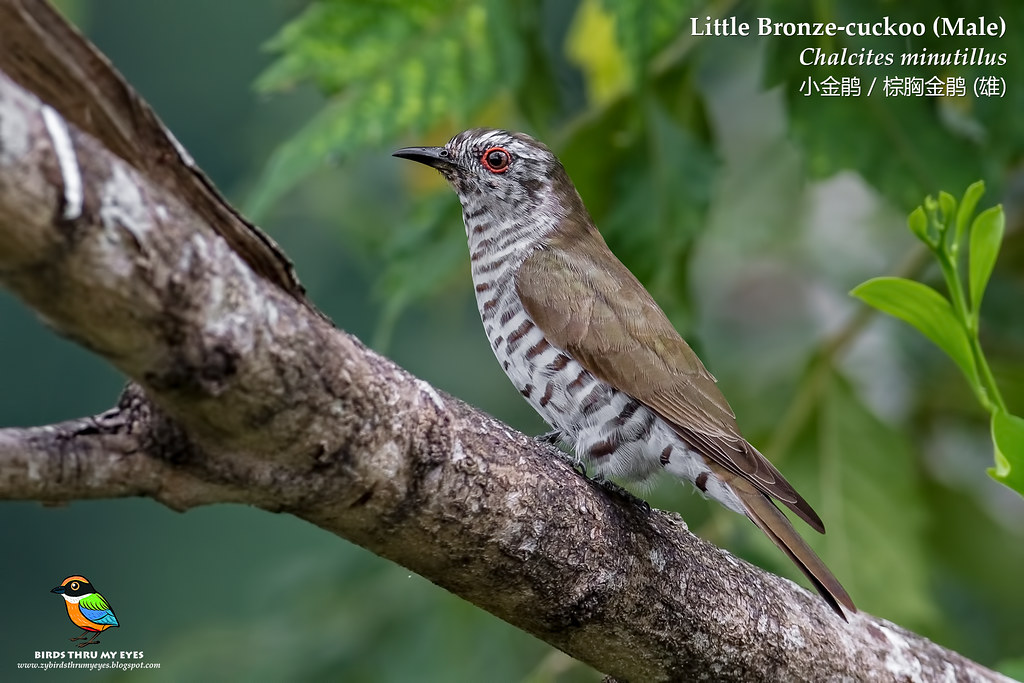
Chrysococcyx minutillus ssp. peninsularis
Date : 04 November 2018
Location : Batu Gajah, Daerah Kinta, Perak

Chrysococcyx minutillus ssp. peninsularis
Date : 16 December 2017
Location : Batu Gajah, Daerah Kinta, Perak
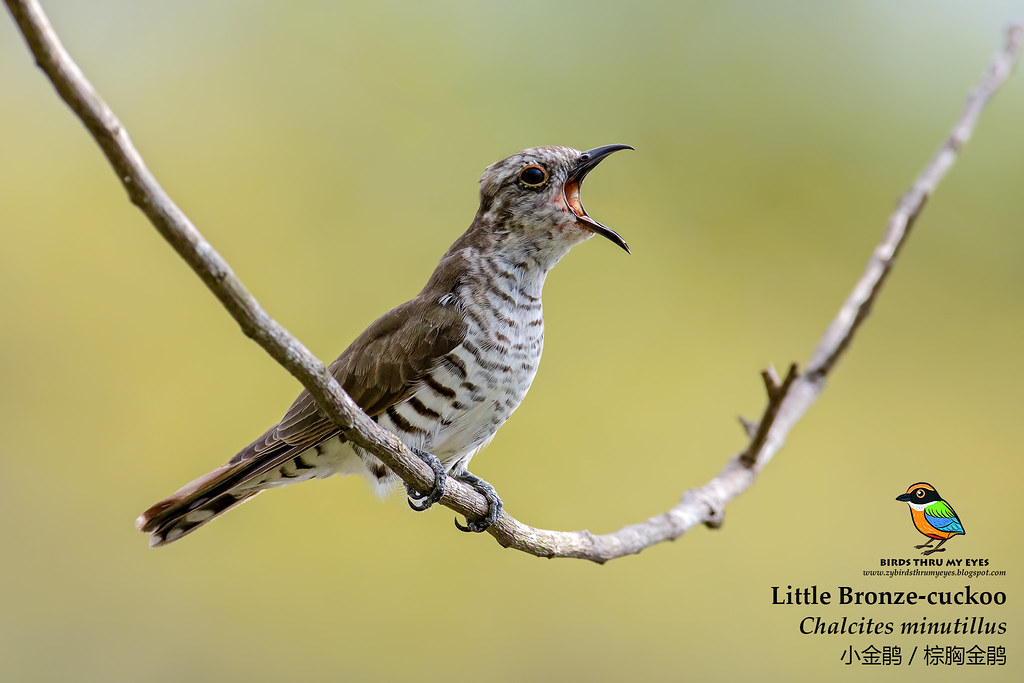
Chrysococcyx minutillus ssp. peninsularis
Date : 16 December 2017
Location : Batu Gajah, Daerah Kinta, Perak
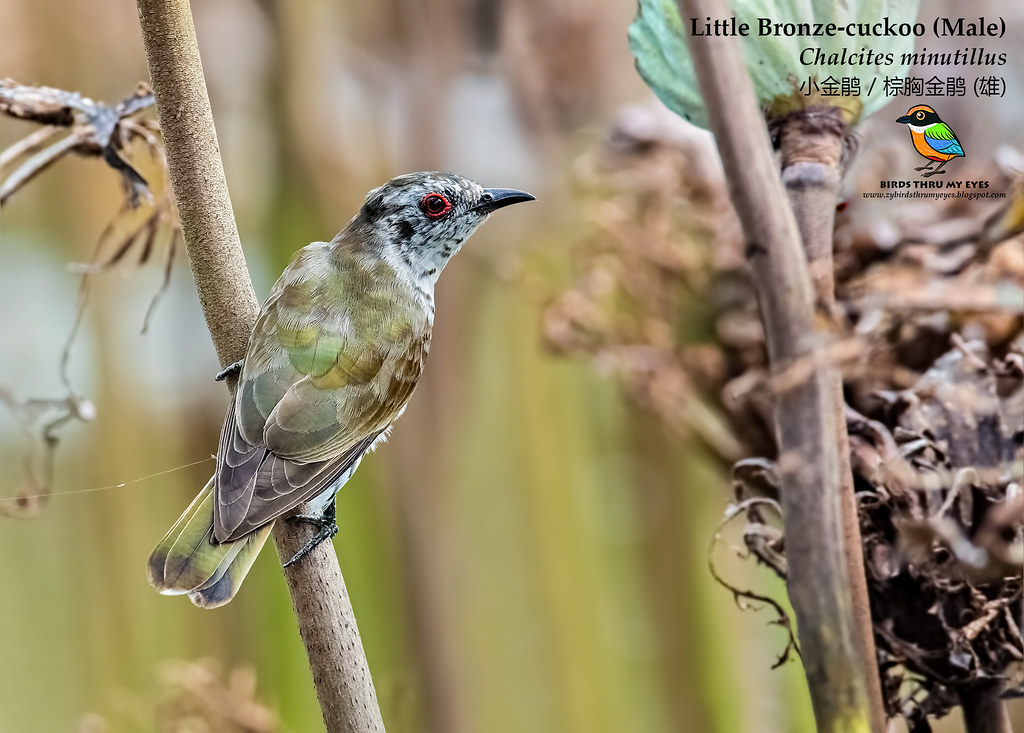
Chrysococcyx minutillus ssp. peninsularis
Date : 16 December 2017
Location : Batu Gajah, Daerah Kinta, Perak
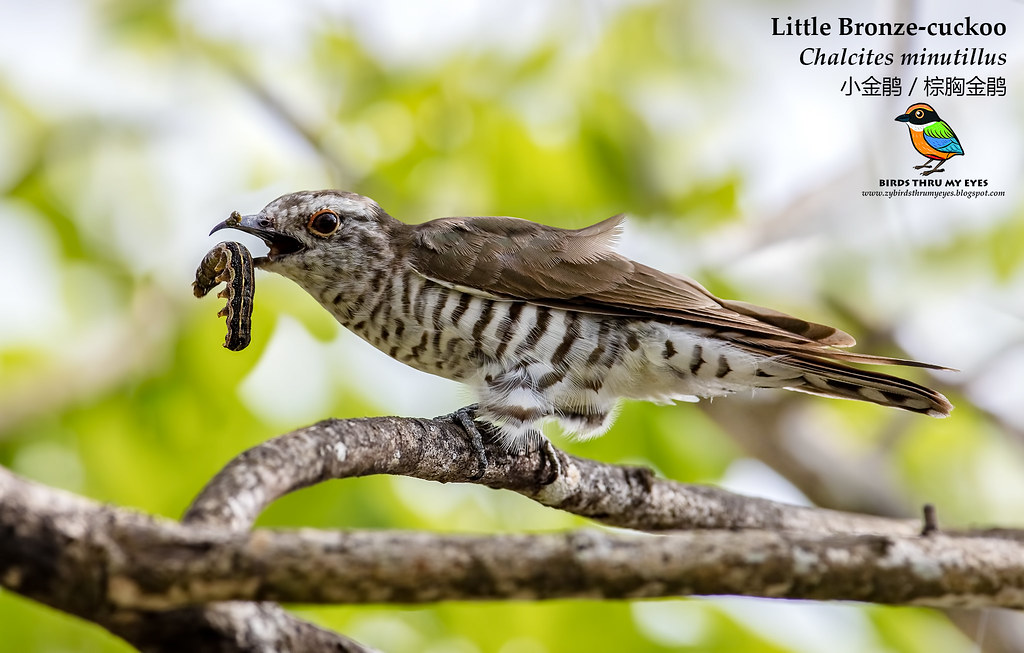
Chrysococcyx minutillus ssp. peninsularis
Date : 16 December 2017
Location : Batu Gajah, Daerah Kinta, Perak
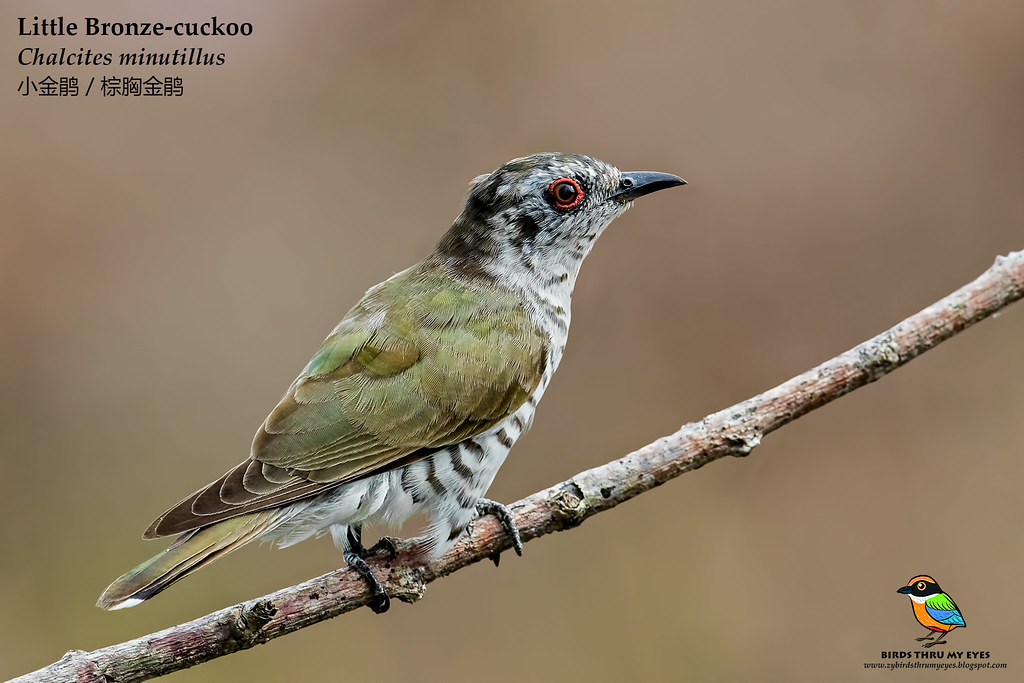
Chrysococcyx minutillus ssp. peninsularis
Date : 16 December 2017
Location : Batu Gajah, Daerah Kinta, Perak

Chrysococcyx minutillus ssp. peninsularis
Date : 10 December 2017
Location : Batu Gajah, Daerah Kinta, Perak