Order - Passeriformes
Family - Cettiidae (Bush Warblers and allies)
Family - Cettiidae (Bush Warblers and allies)
Aberrant Bush Warbler
Horornis flavolivaceus
马氏树莺 (mǎ-shì shù-yīng)

Malay : Cekup-Semak Biasa
Japanese : スンダウグイス (sunda uguisu)
Kanji 日語漢字 : スンダ鴬
Extent of Occurrence (resident/breeding) : 14,000,000km²
Extent of Occurrence (non-breeding) : 14,000,000km²
Migratory Status : Altitudinal Migrant
Breeding Endemic : No
Extent of Occurrence (resident/breeding) : 14,000,000km²
Extent of Occurrence (non-breeding) : 14,000,000km²
Migratory Status : Altitudinal Migrant
Breeding Endemic : No
Taxonomy update for 2022
Sunda Bush Warbler and Aberrant Bush Warbler often are treated as separate species, although the circumscription differs among authors (particularly with regard to subspecies intricatus and oblitus). Results from phylogenetic analyses (Olsson et al. 2006, Alström et al. 2011) based on a small number of loci are conflicting, both between studies and between different analyses of the same data. Awaiting further analyses of genomic data and vocalisations, Sunda Bush Warbler is lumped into Aberrant Bush Warbler; nonetheless we continue to recognize a polytypic group Aberrant Bush Warbler (Sunda) Horornis flavolivaceus [vulcanius Group], with subspecies sepiarius, flaviventris, vulcanius, kolichisi, everetti, banksi, oreophilus, and palawanus. Note that this sequence is revised over the previous arrangement of subspecies of Sunda Bush Warbler: subspecies everetti now follows nominate vulcanius and subspecies kolichisi, rather than being the final subspecies; and subspecies oreophilus now follows, rather than precedes, subspecies banksi.
We recognize a previously overlooked subspecies, kolichisi Johnstone and Darnell 1997 (Johnstone and Darnell 1997), with range “Alor (Lesser Sundas)”. Insert kolichisi immediately following nominate vulcanius.
Subspecies alexandri, with range “Extreme ne India (Manipur) and adjacent Myanmar”, is considered to be a junior synonym of subspecies weberi (Kennerley and Pearson 2010), and is deleted. Revise the range description of weberi from “W Myanmar (Chin Hills)” to “extreme northeastern India (Nagaland, Manipur, and eastern Mizoram) and adjacent western Myanmar south to the Chin Hills”.
Size : 12–14 cm, weight: 6–9 g; mean 7.5 g (flavolivaceus);
12–13 cm, weight not reported (vulcanius)
12–13 cm, weight not reported (vulcanius)
Subspecies (13) and Distribution
EBIRD GROUP (POLYTYPIC)
Aberrant Bush Warbler (Sunda) Horornis flavolivaceus [vulcanius Group]
- Horornis flavolivaceus sepiarius (Kloss 1931, Pajatoengkalan, Pangmoh, Acheen (= Aceh), northern Sumatra; altitude 2,000 meters)
– Confined to mountains above 2,000 m of Aceh Province in northern Sumatra. - Identification :
– Closely resembles flaviventris but slightly duller. - Horornis flavolivaceus flaviventris (Salvadori 1879, Mt. Singalan (= Singgalang), Bella Vista, western Sumatra)
– Confined to stunted upper montane forest at 2,100–3,400 m in western and central Sumatra, with records from summits of Gunung Talamau, Merapi, Singgalang and Kerinci in Barat Province and Gunung Dempu in Selatan Province. - Identification :
– Overall darker brown and underparts grayer than nominate; sides and flanks also darker rufous brown. Supercilium narrower than nominate, with pale rusty brown wash. Head sides mottled dark rufous brown. Bright brown panel visible in closed wing formed by rich-brown edges to wing feathers. - Horornis flavolivaceus vulcanius (Blyth 1870, Java and Timor; inferentially restricted to Java by Delacour, 1947)
– Endemic to mountains between 1,500 m and 2,400 m in Java and Bali, at 625–3,000 m on Lombok. Birds on Gunung Tambora, Sumbawa, are also presumed to be this subspecies. - Identification :
– Upperparts warm olive brown, with well-defined buff supercilium; blackish eye-strip. Underparts distinctly paler, with warm buff wash to breast and upper flanks, darkening to dull grayish brown on lower flanks and undertail coverts. Possesses dull rufous edges to flight feathers and primary coverts. Birds in worn plumage have duller upperparts and paler underparts, with contrastingly pale supercilium. - Horornis flavolivaceus kolichisi (Johnstone & Darnell 1997, Apui, 8°15'S, 124°43’E, Alor Island, Indonesia at about 700 meter)
– Alor Island, from about 600–750 m. - Identification :
– Differs from vulcanius and everetti in smaller size, duller and darker brown upperparts, and the inner primaries and secondaries having more prominent pale edges; also has a proportionally longer and finer bill. - Horornis flavolivaceus everetti (Hartert 1898, Atapupu, Timor)
– Endemic to Timor where occurs mainly above 200 m to at least 2,300 m, but recorded down to sea level. - Identification :
– Slightly smaller and paler than other subspecies, especially on underparts. Breast white washed pale gray, darkening to pale peachy gray at sides. Supercilium whitish and conspicuous. - Horornis flavolivaceus banksi (Chasen 1935, Mt. Mulu, northern Sarawak; altitude 2,200-2,600 meters)
– Confined to mountainous regions of northern Borneo, except on Mount Kinabalu and possibly Gunung Trus Madi where H. v. oreophilus occurs. Birds recorded on Gunung Lunjut, Kalimantan, above 1,900 m are tentatively assigned to this subspecies. - Identification :
– Similar to oreophilus but slightly darker above. - Horornis flavolivaceus oreophilus (Sharpe 1888, Mt. Kinabalu, northern Borneo)
– Restricted to montane forests on Mount Kinabalu in Sabah, Malaysia, at 1,400–3,700 m but most numerous between 2,500 and 3,000 m. Birds on Gunung Trus Madi as presumed to be this subspecies. However, a juvenile observed at 2,350 m on Trus Madi had buffy yellow underparts rather than grayish white and appeared more similar to nominate. - Identification :
– Upperparts darker and more chestnut brown than nominate, with well-defined whitish supercilium. Underparts paler, with gray-brown wash on breast, darker brown flanks and darkest on undertail coverts. Throat light gray. Fringes and edges to wing feathers are warm chestnut and form a bright patch in closed wing. Some individuals have warmer brown upperparts and lack gray wash to underparts. - Horornis flavolivaceus palawanus (Ripley & Rabor 1962, Mt. Mantalingajan, Palawan Island, Philippines; altitude 6,700 feet)
– Restricted to Mount Mantalingajan on Palawan, Philippines, where occurs from approximately 2,000 m to the summit region. - Identification :
– Resembles oreophilus but supercilium yellower. Throat olive gray washed yellow buff. The rest of underparts brighter, with richer olive flanks and undertail coverts.
EBIRD GROUP (POLYTYPIC)
Aberrant Bush Warbler (Perplexing) Horornis flavolivaceus intricatus/oblitus
- Horornis flavolivaceus intricatus (Hartert 1909, T'ai-pai Shan, Tsin-ling (= Ch'in Ling) Mountains, Shensi, China)
– Breeds in mountainous regions in western China from northern Yunnan, central and northern Sichuan, through the Qinling Mountains in south-eastern Shaanxi. Migrates down to the foothills or south to hills of northern Thailand in winter. - Identification :
– Like stresemanni but upperparts slightly darker and browner, with more subdued olive tone. Underparts paler yellow and flanks washed warmer buff. Some individuals in western China possessed brown wash to breast and flanks, with overall coloration more richly toned. - Horornis flavolivaceus oblitus (Mayr 1941, Chapa (= Cha Pa), Tonkin)
– Northern Laos and northwestern Vietnam. - Identification :
– Upperparts only marginally brighter olive and underparts washed yellow more with warmer-washed flanks than intricatus.
Aberrant Bush Warbler (Aberrant) Horornis flavolivaceus [flavolivaceus Group]
- Horornis flavolivaceus flavolivaceus (Blyth 1845, Nepal)
– Resident and altitudinal migrant in central and eastern Himalayas from Himachal Pradesh, India, east through Nepal and Sikkim to Bhutan and south-eastern Tibet. Possibly occurs in western Arunachal Pradesh and north to Qamdo, Tibet. Breeds at 1,800–3,600m and descends to foothills outside breeding season, mainly at 600–2,400m. - Identification :
– Plain brown overall. Upperparts chestnut-tinged brown, with brighter edges of primaries and secondaries, and often pronounced olive wash on rump and uppertail coverts. Underparts paler; varying geographically from uniform olive- brown or ash-gray to whitish with brownish gray wash, with brownish flanks and undertail-coverts and white throat. Characterized by a long, narrow pale-buff or grayish supercilium and dark brown eye-stripe extending from bill to ear-coverts which are faintly speckled. Eye-ring inconspicuous, narrow and whitish. Underparts yellower and overall coloration brighter than other subspecies. - Horornis flavolivaceus stresemanni (Koelz 1954, Mawryngkneng, Khasi Hills, Meghalaya, India)
– An altitudinal migrant confined to Meghalaya and western Assam, India. Breeds from 1,200 m to at least 2,100 m in Garo and Khasi Hills, south of the Brahmaputra River. Descends to the foothills in winter, usually below 1,000 m. - Identification :
– Upperparts slightly darker and browner, with yellowish supercilium more subdued, than nominate. Underparts more sullied and less yellowish, with gray wash on flanks. Racial differences may only be discernible in fresh plumage. - Horornis flavolivaceus weberi (Mayr 1941, Mt. Victoria, Chin Hills, Burma)
– Confined to mountainous regions of Chin Hills, western Myanmar. - Identification :
– Nearly identical to alexanderi which is sometimes subsumed within.

Distribution Map

Horornis flavolivaceus ssp. oreophilus
Date : 28 February 2018
Date : 28 February 2018
Location : Kinabalu Park, Ranau, Bahagian Pantai Barat, Sabah
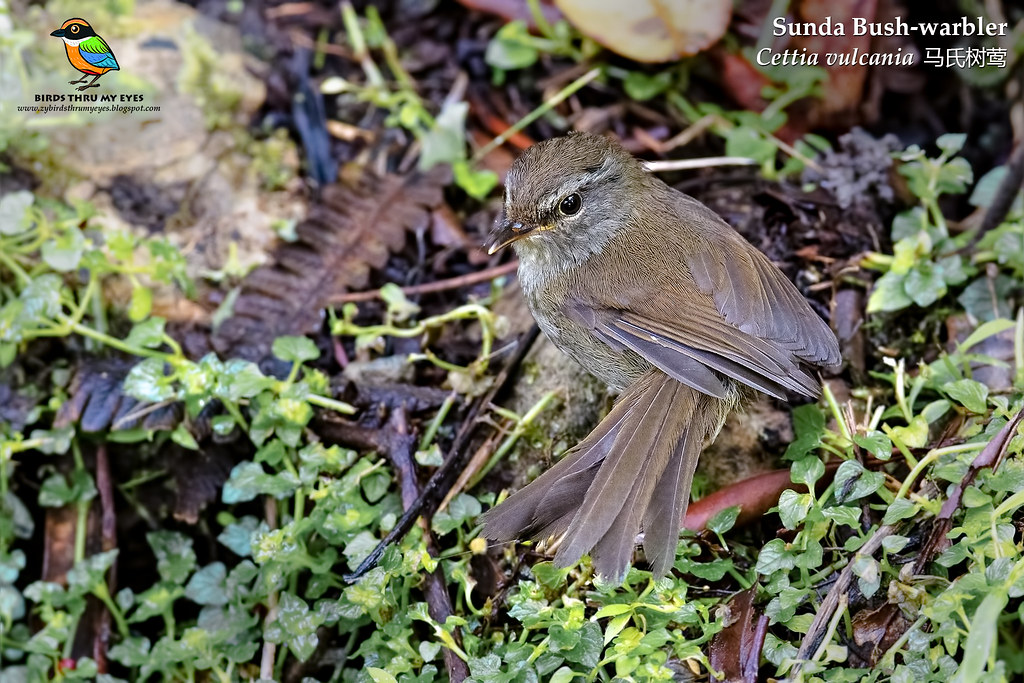
Horornis flavolivaceus ssp. oreophilus
Date : 28 February 2018
Date : 28 February 2018
Location : Kinabalu Park, Ranau, Bahagian Pantai Barat, Sabah
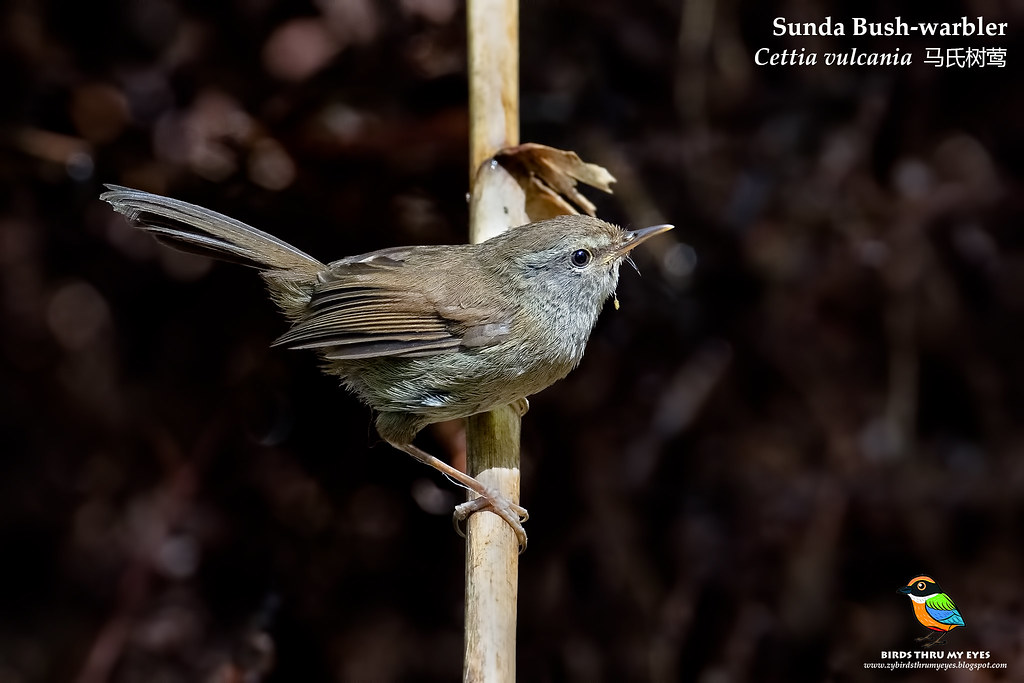
Horornis flavolivaceus ssp. oreophilus
Date : 28 February 2018
Location : Kinabalu Park, Ranau, Bahagian Pantai Barat, Sabah
Date : 28 February 2018
Location : Kinabalu Park, Ranau, Bahagian Pantai Barat, Sabah