Order - Passeriformes
Family - Campephagidae (Cuckooshrikes)
Family - Campephagidae (Cuckooshrikes)
Grey-chinned Minivet
Pericrocotus solaris
灰喉山椒鸟 (huī-hóu shān-jiāo-niǎo)

Malay : Burung-Matahari Gunung Biasa
Japanese : ベニサンショウクイ (beni sanshō-kui)
Kanji 日語漢字 : 紅山椒喰
Extent of Occurrence (resident/breeding) : 4,940,000km²
Extent of Occurrence (non-breeding) : 3,550,000km²
Migratory Status : Altitudinal Migrant
Breeding Endemic : No
Extent of Occurrence (resident/breeding) : 4,940,000km²
Extent of Occurrence (non-breeding) : 3,550,000km²
Migratory Status : Altitudinal Migrant
Breeding Endemic : No
Size : 15–19 cm, 11–17 g (mean 14.5 g)
Subspecies (8) and Distribution
EBIRD GROUP (POLYTYPIC)
Grey-chinned Minivet (Grey-chinned) Pericrocotus solaris [solaris Group]
- Pericrocotus solaris solaris (Blyth, 1846, Darjeeling, Bengal)
– Occurs in the central and eastern Himalayas, from central Nepal east through Sikkim to Assam, and southeast Tibet and southern Yunnan, China. Occurs also in northernmost and western Myanmar. No definite records or specimens from Bangladesh. - Identification :
– Male. The nominate subspecies has the top of head and upperparts leaden black, and the ear coverts and cheeks ashy gray. The upperwing coverts and remiges are blackish, with the greater coverts tipped scarlet, merging into the vermilion band across the bases of the primaries (pp1–7). The central pair of rectrices are black, edged vermilion near their tips, and the other tail feathers are vermilion with black bases. Chin pale gray (scarcely discernible in the field), throat orange; underparts orange scarlet, thighs gray black, and underwing coverts orange.
– Female. Has the black areas replaced by darker gray brown. Lower back, rump, and uppertail coverts greenish yellow; wing and tail as in male, but red replaced by yellow, primaries edged whitish towards tips. Throat grayish white, shading into yellow on the breast and lower underparts. - Pericrocotus solaris rubrolimbatus (Salvadori, 1887, Mulayit Taung, Amherst District, Tenasserim)
– Occurs in eastern and southeastern Myanmar (Tenasserim) and adjacent northern/western Thailand. - Identification :
– Similar to nominate, but has a whitish chin with a yellow (but still orange-yellow) tinge to throat. - Pericrocotus solaris montpellieri (La Touche, 1922, Yangtze Big Bend and 'Chukung to Yangpi', Yunnan)
– Confined to northern Yunnan, in southern China. - Identification :
– Male has a darker olive mantle and an olive-yellow rump. The throat is pale gray (as nominate) but with a slight yellow tinge in its center. - Pericrocotus solaris griseogularis (Gould, 1863, Formosa)
– Occurs throughout southeast mainland China (Guizhou, northern Guangxi, central and southern Hunan, Guangdong, northwest and east Fujian) and adjacent northern Vietnam (Tonkin and North Annam) and northeast Laos; and on the islands of Hainan and Taiwan. - Identification :
– Male is tinged yellow-olive on the throat and is redder on the underparts than rubrolimbatus, to which it is otherwise very similar. - Pericrocotus solaris deignani (Riley, 1940, Peaks of Lang Bian, southern Annam)
– Central and South Annam (Vietnam), and adjacent southern Laos and easternmost Cambodia. - Identification :
– Male is very similar to nassovicus but differs in its slightly darker crown and mantle and yellower underparts; throat without yellow wash, and the back and lesser wing-coverts are said to be ‘warbler green instead of neutral grey'. - Pericrocotus solaris nassovicus (Deignan, 1938, Khao Kuap [lat. 12° 25' N., long. 102° 50' E.], Thailand)
– Southeast Thailand and southwest Cambodia. - Identification :
– Male differs from subspecies griseogularis in having the yellow-olive on throat darker, less contrasting, and the underparts more reddish orange.
EBIRD GROUP (POLYTYPIC)
Grey-chinned Minivet (Grey-throated) Pericrocotus solaris montanus/cinereigula
- Pericrocotus solaris montanus (Salvadori, 1879, Mount Singgalang [lat. 0° 24' S., long. 100° 20' E.], Sumatra)
– The southern Malay Peninsula and Sumatra. On the Peninsula, it occurs in the Larut and Main Ranges from Hala-Bala Wildlife Sanctuary (which stretches into southernmost Thailand), south to Ulu Langat, and on the eastern outliers of Tahan and Benom. On Sumatra, recorded throughout the mountains of the western mainland, from Takengon, Aceh, and the Batak Highlands, south to Mt Kerinci, Barat. - Identification :
– Differs from the other subspecies group (hence all subspecies except cinereigula of Borneo) by its much darker gray throat and its vocalizations. See cinereigula for differences from that subspecies. Measurements (males n = 29, females n = 19): wing of males 78–85 mm, wing of females 77–82 mm; tail of males 85.3–96.3 mm, tail of females 82.6–91.4 mm; bill of males 11.9–14.8 mm, bill of females 11.6–14.9 mm; tarsus of males 14.2–15.6 mm, tarsus of females 13.5–14.8 mm. - Pericrocotus solaris cinereigula (Sharpe, 1889, Kina Balu, North Borneo)
– Occurs throughout the mountains of northern and central Borneo, from Kinabalu to Gunung Mulu and east to the Menyapa Mountains. Recently discovered in the Meratus Mountains, in the far southeast of the island. - Identification :
– Males have a much darker throat than the same sex in subspecies montanus, but females do not differ from the latter.

Distribution Map

Pericrocotus solaris ssp. cinereigula
Date : 11 February 2025
Date : 11 February 2025
Location : Gunung Alab Bird Watching Point, KM55 Jalan Penampang-Tambunan,
Daerah Penampang, Bahagian Pantai Barat, Sabah
.jpg)
Daerah Penampang, Bahagian Pantai Barat, Sabah
.jpg)
Pericrocotus solaris ssp. cinereigula
Date : 11 February 2025
Date : 11 February 2025
Location : Gunung Alab Bird Watching Point, KM55 Jalan Penampang-Tambunan,
Daerah Penampang, Bahagian Pantai Barat, Sabah
Daerah Penampang, Bahagian Pantai Barat, Sabah

Pericrocotus solaris ssp. montanus
Date : 01 May 2018
Date : 01 May 2018
Location : Old Pumphouse Road, Gohtong Jaya, Daerah Bentong, Pahang

Pericrocotus solaris ssp. cinereigula
Date : 11 February 2016
Date : 11 February 2016
Location : Kinabalu Park, Ranau, Bahagian Pantai Barat, Sabah
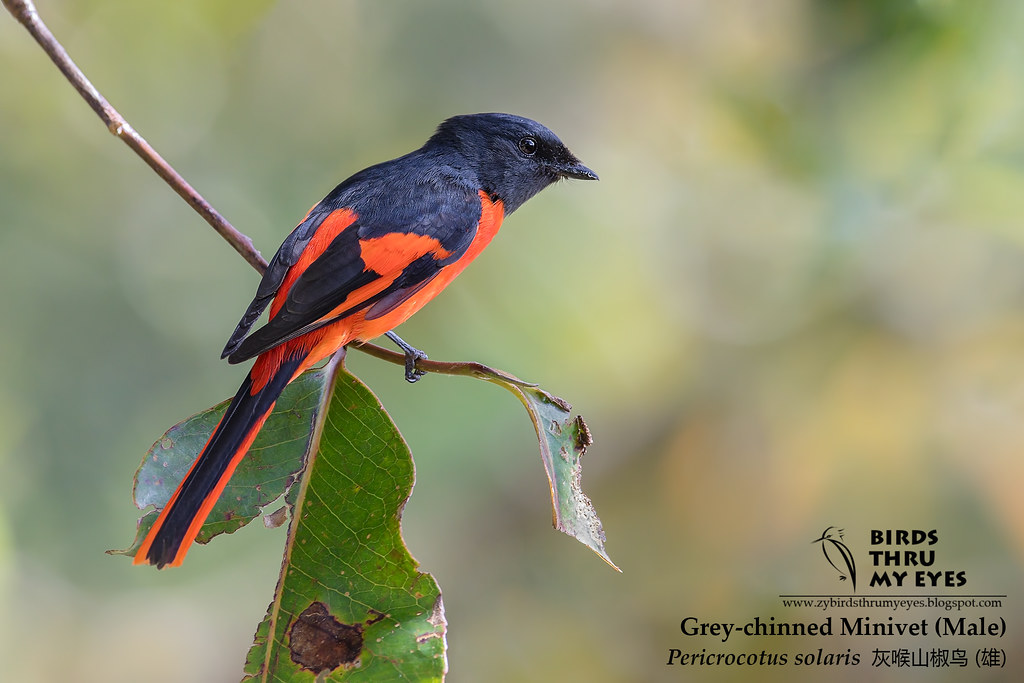
Pericrocotus solaris ssp. cinereigula
Date : 11 February 2016
Date : 11 February 2016
Location : Kinabalu Park, Ranau, Bahagian Pantai Barat, Sabah
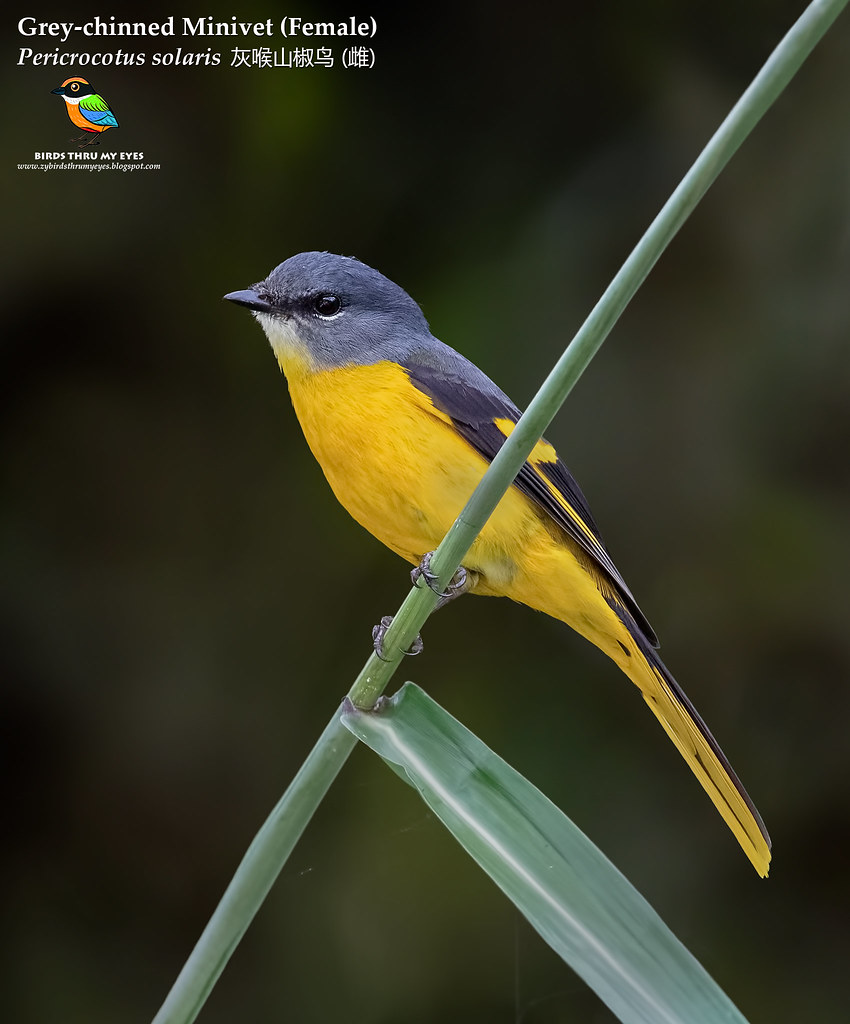
Pericrocotus solaris ssp. cinereigula
Date : 12 February 2016
Date : 12 February 2016
Location : Kinabalu Park, Ranau, Bahagian Pantai Barat, Sabah
No comments:
Post a Comment