Order - Passeriformes
Family - Vireonidae (Vireos)
Family - Vireonidae (Vireos)
White-browed Shrike-babbler
Pteruthius aeralatus
红翅䴗鹛 (hóng chì jú méi)

Malay : Cekup-Kekicau Bercelak Biasa
Japanese : ブライスモズチメドリ (bu-ra-i-su mo zu chime-dori)
Kanji 日語漢字 : ブライス鵙知目鳥 / ブライス百舌知目鳥
Extent of Occurrence (resident/breeding) : 13,200,000km²
Migratory Status : Altitudinal Migrant
Breeding Endemic : No
Extent of Occurrence (resident/breeding) : 13,200,000km²
Migratory Status : Altitudinal Migrant
Breeding Endemic : No
Taxonomy update for 2022
Himalayan Shrike-Babbler Pteruthius ripleyi, Blyth’s Shrike-Babbler Pteruthius aeralatus & Dalat Shrike-Babbler Pteruthius annamensis, genetic divergence (as measured by mitochondrial DNA; Reddy 2008) between these species is low, and plumage differences between most of these also are few and subtle (Rheindt and Eaton 2009). Separation into three species has been justified on the basis of vocal differences (Rheindt and Eaton 2009), but a more recent analysis suggests that vocalizations may be less consistently different than previously thought (Boesman 2016n). Therefore all three species are lumped as White-browed Shrike-Babbler Pteruthius aeralatus.
We continue to recognize each of the three previously recognized species as groups: monotypic groups White-browed Shrike-Babbler (Himalayan) Pteruthius aeralatus ripleyi and White-browed Shrike-Babbler (Dalat) Pteruthius aeralatus annamensis, and a polytypic group White-browed Shrike-Babbler (Blyth’s) Pteruthius aeralatus [aeralatus Group], with subspecies aeralatus, schauenseei, cameranoi, and robinsoni. The former Blyth’s Shrike-Babbler also included two additional monotypic groups: change the English name of the group Pteruthius aeralatus validirostris from Blyth’s Shrike-Babbler (Chestnut-winged) to White-browed Shrike-Babbler (Chestnut-winged), and of the group Pteruthius aeralatus ricketti from Blyth’s Shrike-Babbler (Grey-breasted) to White-browed Shrike-Babbler (Grey-breasted).
Size : Overall length (Pteruthius aeralatus ripleyi) 14 cm;
(Pteruthius aeralatus aeralatus subspecies group) ca. 11.5–15.0 cm or 15.5‒16.5 cm;
(Pteruthius aeralatus annamensis) ca. 15.8‒17.3 cm.
P. a. ripleyi. Adult males (n = 3) 36–38 g, adult females (n = 6) 34–44 g
(Pteruthius aeralatus aeralatus subspecies group) ca. 11.5–15.0 cm or 15.5‒16.5 cm;
(Pteruthius aeralatus annamensis) ca. 15.8‒17.3 cm.
P. a. ripleyi. Adult males (n = 3) 36–38 g, adult females (n = 6) 34–44 g
Subspecies (8) and Distribution
EBIRD GROUP (MONOTYPIC)
White-browed Shrike-Babbler (Himalayan) Pteruthius aeralatus ripleyi
- Pteruthius aeralatus ripleyi (Biswas, B 1960, Himalayas ; restricted to Murree, Rawalpindi, West Pakistan, by-Baker, 1922)
– Endemic to the western Himalayas, occurring from the Murree Hills (Pakistan) and Kashmir east to at least central Nepal. The eastern limit is unclear, and whether this species occurs in Bhutan and in northeast India (away from Sikkim) is unclear (18); although Rheindt and Eaton (suggested that it may meet P. a. validirostris in Bhutan, they acknowledged the need for increased molecular and vocal sampling to clarify the situation. - Identification :
– Compared to the geographically adjacent P. a. validirostris, this subspecies has whiter underparts, more orange tertials (in male), and browner primary edges, but they are likely to be inseparable in the field.
EBIRD GROUP (MONOTYPIC)
White-browed Shrike-Babbler (Chestnut-winged) Pteruthius aeralatus validirostris
- Pteruthius aeralatus validirostris (Koelz, WN 1951, Kohima, Naga Hills, Assam)
– Replaces Pteruthius aeralatus ripleyi in the eastern Himalayas, occurring from central Nepal east to Bhutan and all of the northeast Indian hill states, adjacent southeast Tibet and northwest and west Myanmar. - Identification :
– Compared to Pteruthius aeralatus ricketti and the aeralatus subspecies group, male validirostris is characterized by its deeper chestnut tertials and a deep pinkish suffusion on the lower flanks, whilst the female has a distinctly gray crown and white postocular supercilium; and compared to the geographically adjacent ricketti the underparts of the male are much whiter. Overall length 132–150 mm, head 42–44 mm, tail 62–67 mm.
EBIRD GROUP (MONOTYPIC)
White-browed Shrike-Babbler (Gray-breasted) Pteruthius aeralatus ricketti
- Pteruthius aeralatus ricketti (Ogilvie-Grant, WR 1904, Fukien and southern Yunnan)
– Occurs from northeast Myanmar into adjacent south and southeast China (west-central Sichuan south to western Yunnan, and east to northern Fujian, and Hainan), and northern Indochina. - Identification :
– Compared to all other taxa, male ricketti has much darker smoky gray underparts and gray ear-coverts. Males also have chestnut tertials with yellow bases and outer webs, and black tips.
EBIRD GROUP (POLYTYPIC)
White-browed Shrike-Babbler (Blyth's) Pteruthius aeralatus [aeralatus Group]
- Pteruthius aeralatus aeralatus (Blyth, E 1855, mountainous interior of the Tenasserim provinces. Lower Burma)
– Occurs from east and southeast Myanmar (including northern Tenasserim) across most of Thailand (except the Peninsula), Laos, and Vietnam, south to central and southern Annam and southern Cambodia. - Identification :
– Described under Plumages. Wing length of males 78–82 mm (mean 79.8 mm, n = 22), wing length of females 76–83 mm (mean 79.3 mm, n = 24). - Pteruthius aeralatus schauenseei (Deignan, HG 1946, Khao Luang [lat. 8° 30' N., long. 99° 45' E.], Thailand)
– Confined to southern Thailand, south of the Isthmus of Kra, but entirely north of the Thai–Malay border. - Identification :
– Comparatively small (male and female wing lengths not exceeding 77 mm and 75 mm, respectively) with pale underparts (gray on male restricted to a faint wash on the throat, breast, and rear flanks). Females are distinguished from the nominate subspecies in having no chestnut on the tertials. Wing length of males 69–77 mm (mean 73.5 mm, n = 6), wing length of females 72–75 mm (mean 73.3 mm, n = 3). - Pteruthius aeralatus cameranoi (Salvadori, AT 1879, Mount Singgalang [lat. 0° 24' S., long. 100° 20' E.], Sumatra)
– Confined to the highlands of Peninsular Malaysia and Sumatra. - Identification :
– Male is very like those of the nominate subspecies and schauenseei but slightly darker above and below. On the Main Range, Malaysia, birds are slightly paler than Sumatran birds, with less pink on the flanks (males) and less warm buff on the underparts (females). Although populations in Peninsular Malaysia are currently included in subspecies cameranoi, they are in fact intermediate between that taxon and subspecies schauenseei. They are fractionally larger than cameranoi sensu stricto but Wells considered that the variation was too great, and intermediacy between cameranoi and schauenseei too indiscrete, to warrant a new name. - Pteruthius aeralatus robinsoni (Chasen, FN; Kloss, CB 1931, Kina Balu, North Borneo)
– Endemic to Borneo, with records throughout the highlands of Sabah, Sarawak, and Kalimantan. - Identification :
– Compared to subspecies cameranoi, the male has more pinkish flanks and belly. Intermediate in size between the Pied Shrike-Babbler (Pteruthius flaviscapis) and continental subspecies of the present subspecies group (wing length 73–78 mm).
EBIRD GROUP (MONOTYPIC)
White-browed Shrike-Babbler (Dalat) Pteruthius aeralatus annamensis
- Pteruthius aeralatus annamensis (Robinson, HC; Kloss, CB 1919, Lang Bian Peaks, southern Annam)
– Only definitely known from the Langbian Plateau, South Annam, in southern Vietnam, but speculated to also occur in adjacent southern Mondolkiri province, in eastern Cambodia; however birds as close to Dalat as Kon Tum, in Vietnam, refer to P. a. aeralatus. - Identification :
– Compared to the geographically adjacent Pteruthius aeralatus aeralatus, the male has slightly darker gray on the upperparts, paler underparts (without the indistinct white submoustachial of P. a. aeralatus), and lacks black tips to the tertials, whilst the female is generally less buffy below, and the tertials are much more extensively chestnut; both sexes of the present subspecies possess smaller white tips to the primaries.


Pteruthius aeralatus ssp. robinsoni
Date : 11 February 2025
Date : 11 February 2025
Location : Gunung Alab Bird Watching Station, KM55 Jalan Penampang-Tambunan,
Daerah Penampang, Bahagian Pantai Barat, Sabah
.jpg)
.jpg)
Daerah Penampang, Bahagian Pantai Barat, Sabah
.jpg)
Pteruthius aeralatus ssp. robinsoni
Date : 12 February 2025
Date : 12 February 2025
Location : Gunung Alab Bird Watching Station, KM55 Jalan Penampang-Tambunan,
Daerah Penampang, Bahagian Pantai Barat, Sabah
Daerah Penampang, Bahagian Pantai Barat, Sabah
.jpg)
Pteruthius aeralatus ssp. robinsoni
Date : 11 February 2025
Date : 11 February 2025
Location : Gunung Alab Bird Watching Station, KM55 Jalan Penampang-Tambunan,
Daerah Penampang, Bahagian Pantai Barat, Sabah
Daerah Penampang, Bahagian Pantai Barat, Sabah
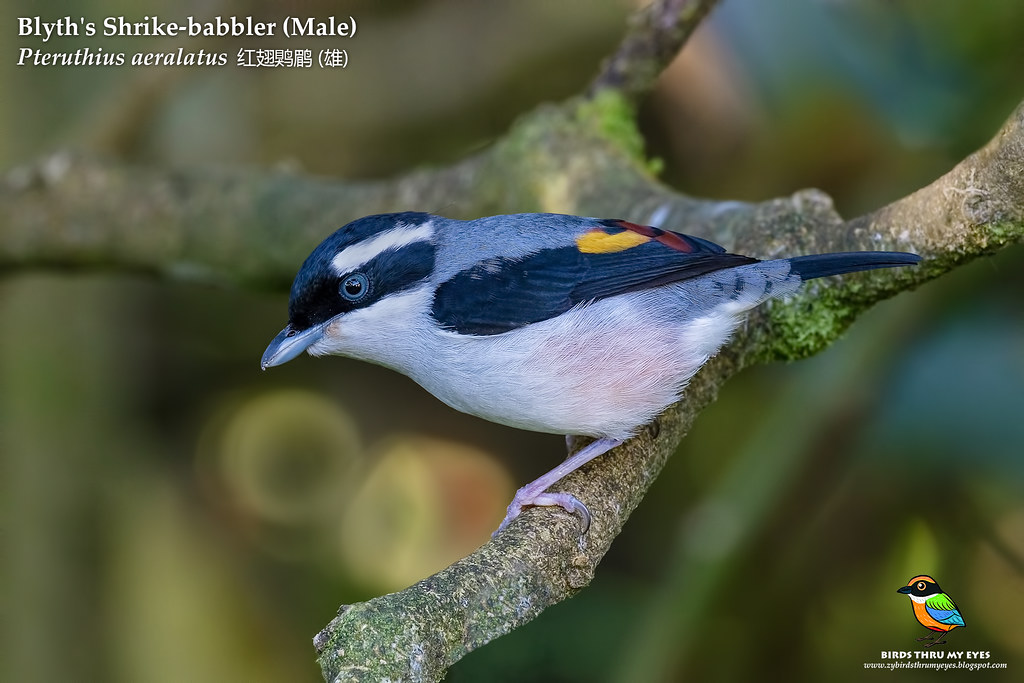
Pteruthius aeralatus ssp. robinsoni
Date : 18 February 2019
Date : 18 February 2019
Location : Crocker Range National Park (Gunung Alab Substation), Daerah Penampang,
Bahagian Pantai Barat, Sabah
Bahagian Pantai Barat, Sabah

Pteruthius aeralatus ssp. robinsoni
Date : 18 February 2019
Date : 18 February 2019
Location : Crocker Range National Park (Gunung Alab Substation), Daerah Penampang,
Bahagian Pantai Barat, Sabah
Bahagian Pantai Barat, Sabah
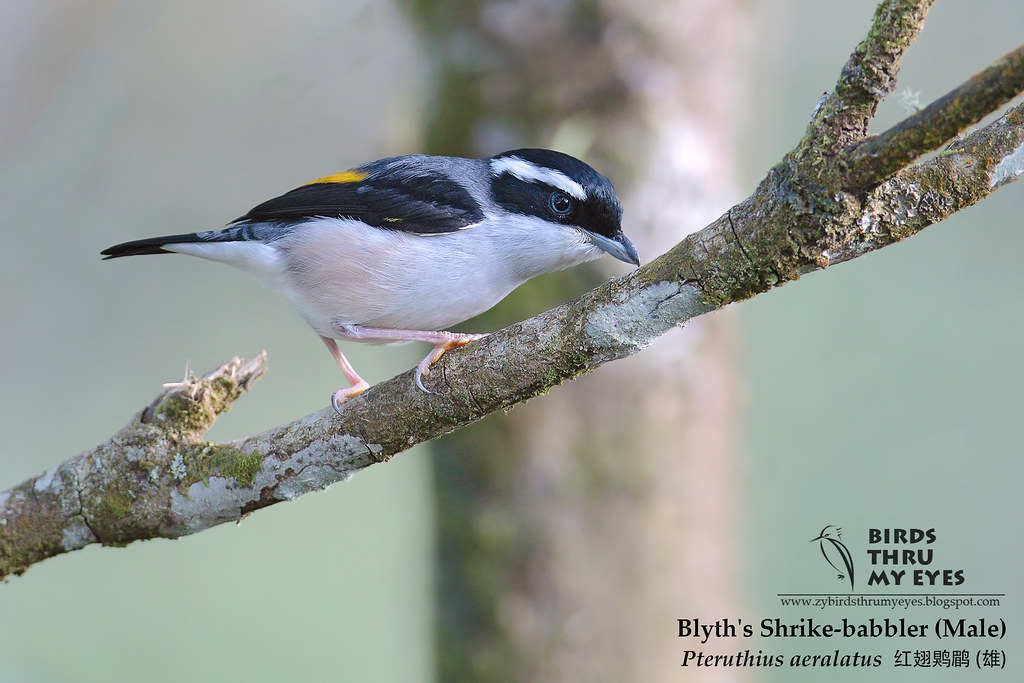
Pteruthius aeralatus ssp. robinsoni
Date : 11 February 2016
Date : 11 February 2016
Location : Kinabalu Park, Ranau, Bahagian Pantai Barat, Sabah

Pteruthius aeralatus ssp. robinsoni
Date : 12 February 2016
Date : 12 February 2016
Location : Kinabalu Park, Ranau, Bahagian Pantai Barat, Sabah
No comments:
Post a Comment